
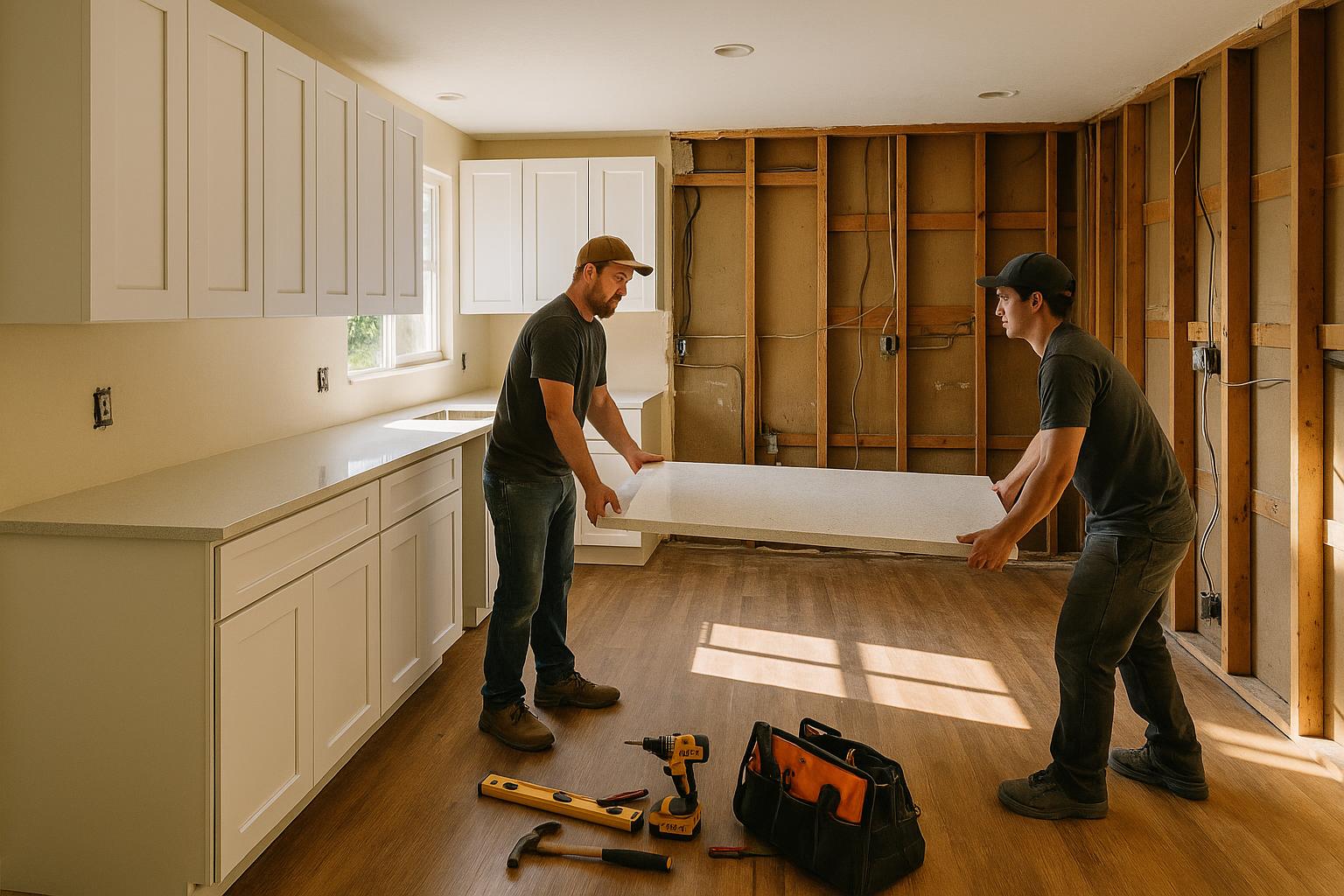
The Question Every San Diego Homeowner Asks Before a Kitchen Remodel
You've been dreaming about a new kitchen for months — maybe years. The outdated countertops, the cabinets that have seen better decades, the layout that makes cooking feel like an obstacle course. You're ready to pull the trigger. But before you commit, there's one question that stops almost everyone in their tracks: How long is this actually going to take?
It's a fair question. Your kitchen is the most-used room in your home, and being without it for weeks (or longer) is a big deal. The good news is that with realistic expectations and the right contractor, a kitchen remodel in San Diego doesn't have to derail your life. Let's break down what a real timeline looks like — phase by phase.
The Short Answer
Most full kitchen remodels take between 6 and 12 weeks from the start of demolition to the final walkthrough. A smaller refresh — think new countertops, a backsplash, and painted cabinets — might wrap up in 3 to 4 weeks. A large-scale gut renovation with structural changes, custom cabinetry, and relocated plumbing can stretch to 14 weeks or more.
But those numbers only tell part of the story. The timeline actually begins well before anyone swings a hammer.
Phase 1: Planning and Design (2–6 Weeks)
This is the phase most homeowners underestimate. Before any physical work begins, you'll need to make decisions about layout, materials, finishes, appliances, and budget. If you're working with a remodeling contractor who handles design-build, this process tends to move faster because everything stays under one roof.
During this phase, you'll typically:
- Meet with your contractor for an initial consultation and site assessment
- Discuss your goals, lifestyle needs, and budget
- Review design concepts and floor plans
- Select cabinets, countertops, flooring, fixtures, and appliances
- Finalize the scope of work and sign a contract
One of the biggest delays in any remodel is indecision on materials. If you can walk into your first meeting with inspiration photos and a general sense of style, you'll save yourself weeks.
Phase 2: Permits and Material Ordering (2–4 Weeks)
In San Diego, most kitchen remodels that involve electrical, plumbing, or structural changes require permits from the city's Development Services Department. Permit timelines vary, but plan for at least one to two weeks for straightforward projects. More complex renovations may take longer.
This is also when your contractor orders cabinets, countertops, and any specialty materials. Custom cabinetry can have lead times of 4 to 8 weeks, which is why experienced contractors order early — often while permits are still being processed — to keep the project on track.
Pro tip: Choosing in-stock or semi-custom cabinets can shave weeks off your timeline without sacrificing quality.
Phase 3: Demolition (2–5 Days)
Once permits are approved and materials are confirmed, the real action begins. Demolition is fast and dramatic. Your old cabinets, countertops, flooring, and sometimes walls come out in a matter of days. If your remodel involves removing a wall to open up the kitchen to a living or dining area — a hugely popular request here in San Diego — structural support will be addressed during this phase as well.
Phase 4: Rough-In Work (1–2 Weeks)
This is the behind-the-scenes phase that makes everything else possible. Electricians, plumbers, and HVAC technicians run new lines, move outlets, and install ventilation. If you're relocating your sink, adding an island with a cooktop, or upgrading to a gas range, this is when that infrastructure goes in.
Inspections happen at the end of this phase. The city inspector needs to sign off on all rough-in work before walls get closed up. Scheduling inspections promptly is one of the ways a good contractor keeps your project from stalling.
Phase 5: Drywall, Painting, and Flooring (1–2 Weeks)
With rough-in work approved, the space starts to take shape. New drywall goes up, gets taped, mudded, and sanded. Paint goes on the walls and ceiling. Flooring is installed — whether that's tile, luxury vinyl plank, or hardwood.
This phase is when the kitchen starts to feel like a real room again, and it's one of the most satisfying parts of the process for homeowners.
Phase 6: Cabinets, Countertops, and Fixtures (1–2 Weeks)
Now comes the transformation you've been waiting for. Cabinets are installed first, followed by countertop templating and fabrication. Granite, quartz, and other stone countertops are typically templated after cabinets are in place to ensure a perfect fit, which adds a few days to a week of lead time.
Once countertops are set, the plumber and electrician return for final connections — your sink, faucet, garbage disposal, dishwasher, range hood, and lighting all get hooked up. The backsplash goes in. Hardware gets mounted on cabinets and drawers.
Phase 7: Final Details and Walkthrough (2–3 Days)
The last stretch includes touch-up painting, caulking, final adjustments to cabinet doors and drawers, appliance installation, and a thorough cleaning. Your contractor should walk through the entire project with you, checking every detail against the original scope of work.
This is your chance to flag anything that needs attention before the project is officially complete.
What Can Delay a Kitchen Remodel?
Even the best-planned projects can hit bumps. Here are the most common causes of delays:
- Material backorders: Supply chain issues can push delivery dates. Ordering early and having backup selections helps.
- Hidden problems: Once walls open up, you might discover outdated wiring, water damage, or plumbing that doesn't meet current code. A reputable contractor will address these issues transparently.
- Change orders: Changing your mind mid-project — swapping cabinet styles, adding a window, upgrading appliances — adds time. It's not the end of the world, but it does extend the timeline.
- Permit delays: While San Diego's permitting process is generally manageable, backlogs happen. Your contractor should factor this into the schedule.
How to Keep Your Kitchen Remodel on Schedule
You have more control over the timeline than you might think. Here's how to help things move smoothly:
- Make material selections early. The sooner your cabinets, countertops, and fixtures are ordered, the sooner they arrive.
- Set up a temporary kitchen. A microwave, mini fridge, and coffee maker in another room will keep you functional and reduce the temptation to rush decisions.
- Trust the process. There will be days when it looks like nothing is happening. Behind the scenes, materials are being fabricated, inspections are being scheduled, and trades are being coordinated.
- Communicate with your contractor. A good remodeling team will keep you updated weekly, if not daily. Don't hesitate to ask questions.
Ready to Start Planning?
A kitchen remodel is one of the best investments you can make in your San Diego home — both for your daily quality of life and for long-term value. Understanding the timeline upfront takes the mystery out of the process and helps you plan around work, family, and everything else life throws at you.
At Patriot Basement Contractors, we've guided homeowners across San Diego, La Jolla, Mission Valley, and beyond through kitchen remodels of every size. We give you an honest timeline from day one, keep you informed at every stage, and deliver results that last. If you're ready to start the conversation, we'd love to hear from you.